Teaching Philosophy
I have been teaching art for over twenty years, working primarily as a college professor while also leading workshops, youth summer camps, private instruction, and community-based classes. Teaching is a natural extension of my painting practice. It asks me to slow down, examine my creative process, and articulate what often feels intuitive. Just as importantly, it allows me to connect with others through a shared enthusiasm for art. Helping students discover and trust their authentic artistic voice is deeply meaningful to me, and it brings me genuine joy.
I believe that making art is essential for both individual and collective well-being. It is an inherently human activity, one that feels especially vital in an increasingly fast-paced, digital world. Art encourages us to slow down, pay attention, and remain present. Through observation and reflection, it sharpens our awareness of both the external world and our inner lives. I also believe that everyone has an artistic voice shaped by their unique experiences, and that every voice is relevant, valuable, and worthy of being explored.
My teaching often begins with observational drawing—learning how to truly see. As students learn to notice what they once overlooked, they develop a deeper understanding of visual information. From there, practice and experimentation become central. Through risk-taking and exploration of materials, techniques, and subject matter, students begin to develop an expressive language that feels personal. Over time, this process becomes more intentional and reflective as students investigate why they make the work they do. The result is not only technical skill, but a way of being—one that values attention, curiosity, and nuance in art and in everyday life.
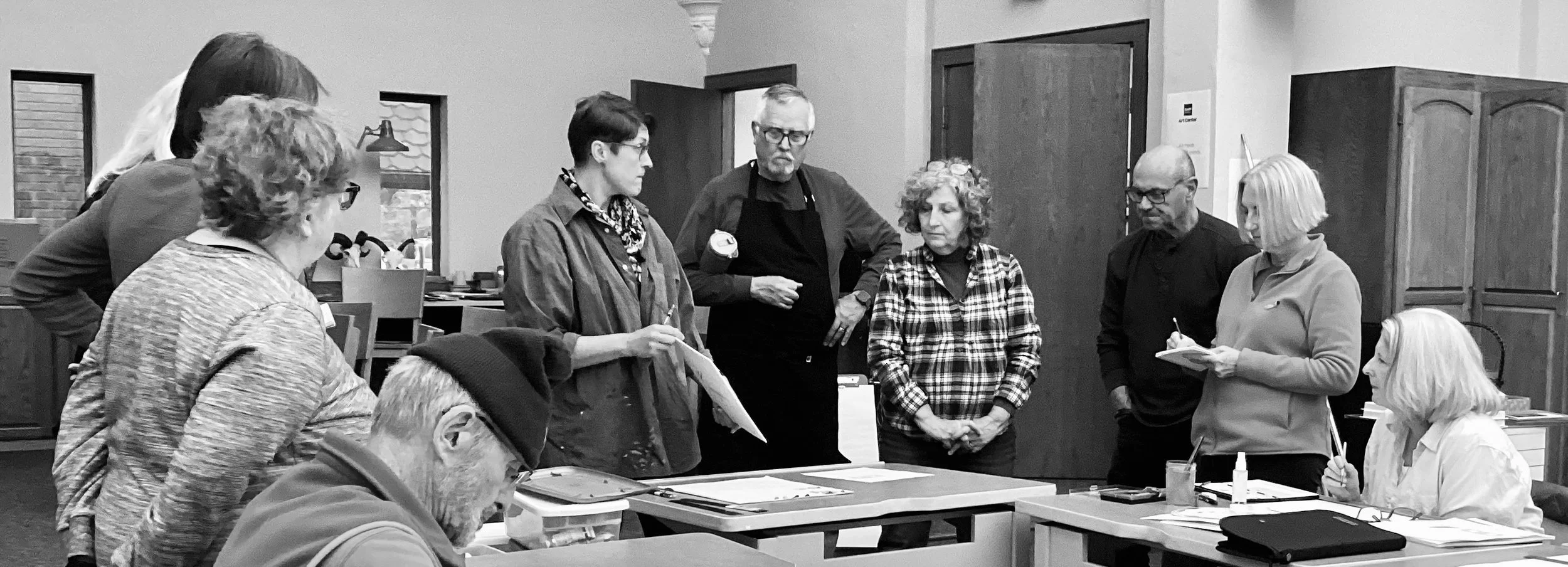
I strive to create a classroom environment where students feel seen, respected, and supported as individuals. Course content is broken down into accessible lessons and shared through a mix of presentations, demonstrations, discussions, individual feedback, and group critique. I openly acknowledge vulnerability by sharing my own learning experiences, including moments of frustration, failure, and growth. I remind students that learning is challenging, and that discomfort is often part of meaningful progress. My goal is to foster a space of safety and acceptance where students feel comfortable taking risks, asking questions, expressing frustration, and celebrating successes.
Ultimately, my goal as a teacher is to help students strengthen their ability to see and process visual information, and then to apply that vision to their own personal and expressive interpretations as their confidence grows. I make it clear that my way of making art is only one of many, and I introduce students to a wide range of artistic approaches. I offer tools and guidance, but how those tools are used is entirely up to the student.
Sharing my love of art-making with others is deeply fulfilling. I am grateful for every student who chooses to share their artistic journey with me and trusts me to be part of their growth.